
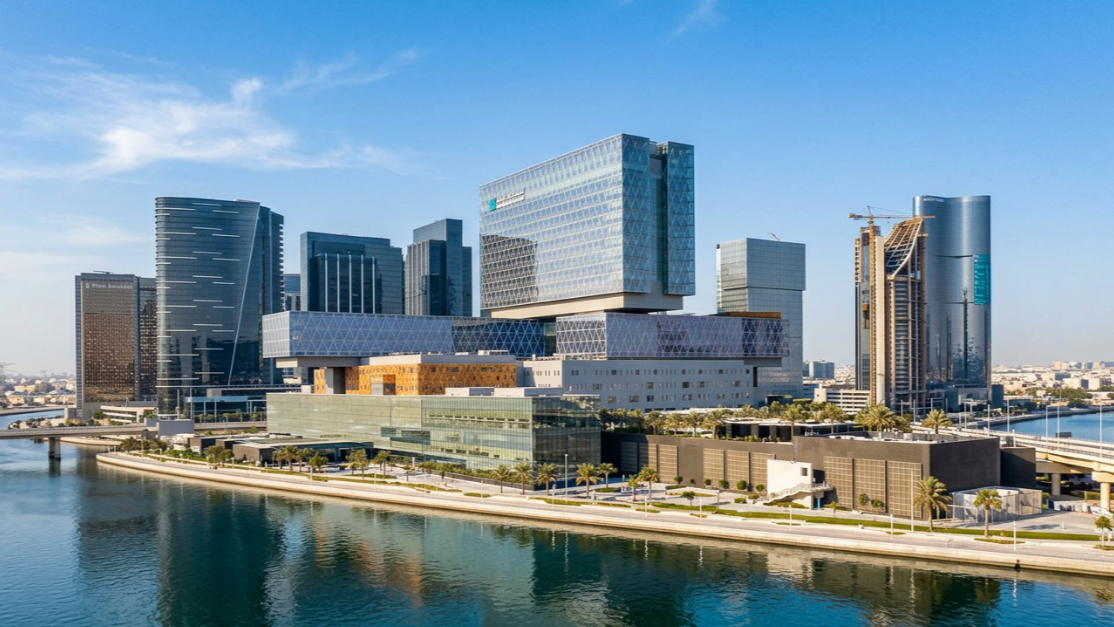
In the first half of 2026, Abu Dhabi’s real estate market recorded AED 117 billion in transactions while attracting non-resident investors from 116 nationalities, up from 82 just a year earlier.
That growth is more than a statistic. It reflects a market drawing international capital at an accelerating pace, supported by strong fundamentals, new project launches, and growing confidence in Abu Dhabi as a long-term investment destination. Here are the numbers that explain why.
The buyer base
One thing worth looking at in any fast-growing market is whether the buyer base is widening or narrowing.
Non-resident investors from 116 nationalities bought property in Abu Dhabi during the first half of 2026. In the same six months of 2025, the figure was 82.
Foreign direct investment reached AED 13.8 billion, an increase of 309 per cent, and exceeded the total recorded across all of 2025. The investors behind it came from markets including the United Kingdom, China, the Russian Federation, the United States, Germany and France.
Thirty-four nationalities appeared that had not been there a year earlier.
The supply side
One figure in the report moved differently from the rest.
While transaction value rose 112 per cent, new project registrations rose 16 per cent. Twenty-eight projects entered the register during the half. That is growth, but it is measured growth, and the distance between those two percentages says something the headline figure does not.
Oversupply is what ends property cycles. It happens when developers read a demand surge as a permanent condition and launch against it, and the correction arrives two or three years later when the inventory lands in a market that has moved on. The pattern shows up as a supply curve steeper than the demand curve.
In the first half of 2026, the two curves moved in the opposite order.
The half-year in figures
All figures as published by ADREC.
- Total transaction value: AED 117B, up 112 per cent
- Transaction volume: up 61.7 per cent
- Sales value: AED 86.1B across 16,838 transactions, up 163.7 per cent
- Mortgage transactions: AED 26.7B across 8,876 transactions, up more than 33 per cent
- Foreign direct investment: AED 13.8B, up 309 per cent
- Non-resident investor nationalities: 116, up from 82
- Investment zone value: AED 75B, up 181 per cent from AED 26.7B
- New projects registered: 28, up 16 per cent
- Professional licences issued: 2,040, up 34 per cent
One line moves differently from the rest: new projects registered, at 16 per cent.
What sits underneath the figures
Access. ADREC approved eight new investment zones during the period, bringing the total to 50. These are the districts where ownership in Abu Dhabi is open to investors of all nationalities, and they now account for the largest share of foreign capital entering the market.
Product. Disney’s first theme park resort in the Middle East and Sphere Abu Dhabi are both confirmed for Yas Island’s orbit. Five new islands are in development across the emirate. Aldar launched Marsa Al Saadiyat, activating the final phase of the Saadiyat master plan. Sobha began its first master-planned community in the capital. Each of these has a published master plan behind it.
Regulation. The emirate’s licensed broker count reached 3,302. Its Madhmoun platform has facilitated more than 41,200 regulated advertising permits since launch, part of a wider effort to improve the quality of market information available to investors.
“Investment decisions begin long before a transaction takes place. They begin with a clear understanding of the market, its direction and the rules that govern it,” said Rashed Al Omaira, Director General of ADREC.
What the report shows, and what it leaves open
The H1 figures describe what happened. They do not predict what comes next.
What they do show is a set of conditions that can be checked rather than argued: a nationality count that grew by thirty-four, foreign direct investment that passed a full year’s total in six months, investment zones that nearly tripled in value, and new project registrations growing at 16 per cent while transaction value grew at 112 per cent.
Anyone researching how to buy property in Abu Dhabi, comparing off-plan opportunities across the UAE, or simply deciding whether the emirate belongs on a shortlist at all, is looking at the same public report that thirty-four new nationalities looked at this year.
They were not reading a forecast. They were reading the figures, and reaching their own conclusions.
Sources: Abu Dhabi Real Estate Centre (ADREC), H1 2026 transaction report (17 July 2026) and results published via Abu Dhabi Media Office; official developer announcements (Miral and The Walt Disney Company, Aldar, Sobha Realty) and the Department of Culture and Tourism Abu Dhabi. Figures as published by their sources and subject to change. This article is market commentary, not investment advice.

Join The Discussion