
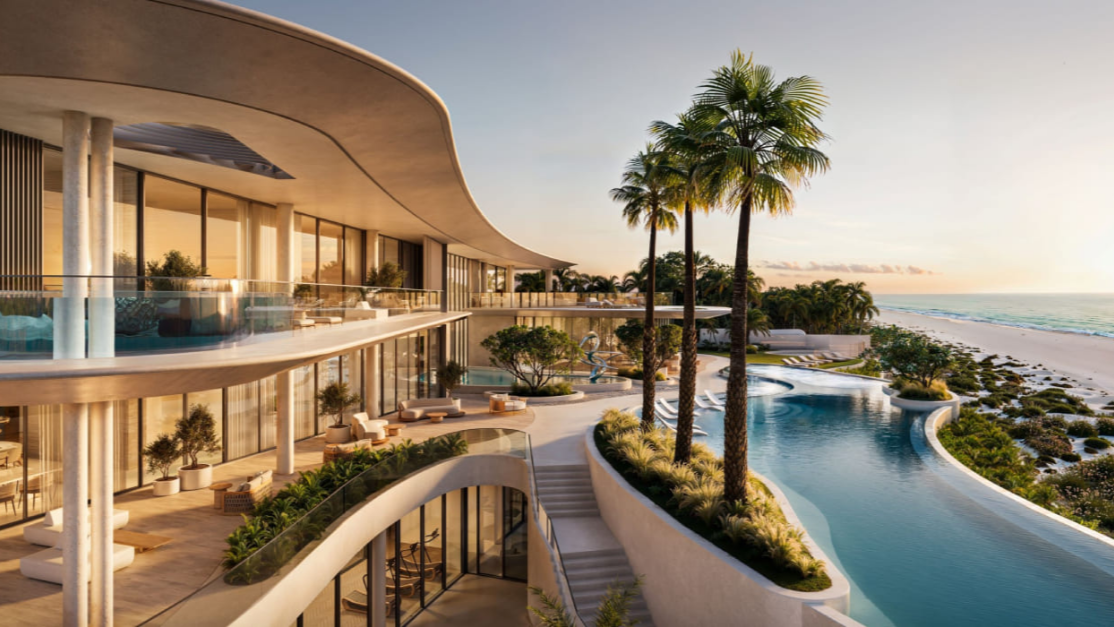
Off-plan sales accounted for 89 percent of residential sales value in Abu Dhabi during the first half of 2026, according to the Abu Dhabi Real Estate Centre (ADREC). Two years ago, that figure was closer to three-quarters of the market. For most people buying property in Abu Dhabi today, whether for end-use or investment that property is likely still under construction.
That shift changes what buying property in Abu Dhabi actually means for investors and end-users. An off-plan purchase is not a transaction that concludes at signing. It is a relationship with a property that does not yet exist, governed by a payment structure, a legal framework, and a timeline. Understanding how that structure works, and what it means for each type of buyer in practice, matters more now that the market has moved so firmly in this direction, whether you’re buying to live in the property or buying it as an investment.
How an off-plan purchase generally unfolds
The process typically begins with a buyer selecting a unit within a development and paying an initial booking deposit. That deposit is followed by a Sale and Purchase Agreement (SPA), the contract that sets out the unit specifications, the price, and the payment schedule for everything that follows.
From there, payment does not happen in a single instalment. Off-plan purchases in Abu Dhabi are structured around phased payment plans, with instalments linked to construction milestones rather than calendar dates. A buyer typically pays a portion at booking, further portions as the building progresses through defined stages, and the remaining balance closer to completion. This structure is one of the most commonly cited differences between off-plan and ready-market purchases: the buyer’s capital is committed gradually, alongside the physical progress of the building, rather than upfront.
Underpinning that structure is escrow protection. Abu Dhabi’s regulatory framework requires developers to deposit off-plan buyer payments into escrow accounts dedicated specifically to that project, monitored by the Department of Municipalities and Transport with oversight from ADREC. Funds in these accounts are only released as construction actually happens.
Before the handover two checks take place. The government, through Abu Dhabi City Municipality under DMT, verifies structural integrity, safety, and regulatory compliance before issuing an occupancy certificate. Separately, buyers typically inspect the unit themselves to confirm everything matches what was agreed, a step known as snagging. Once both are done, and the final payment is made, the buyer receives the keys as the property registration is finalised through DARI, the digital platform powered by the Department of Municipalities and Transport and ADREC, where the legal title deed is issued.
Where the market stands today
Off-plan now makes up most of Abu Dhabi’s residential market. In 2024, it was about 74 percent of residential sales value, according to ADREC. By the first half of 2026, that had grown to 89 percent of value and 82 percent of transactions.

The activity on the ground shows what that looks like in practice. Yas Island led Abu Dhabi’s off-plan market in the second quarter of 2026, with Gardenia Bay as the busiest residential project in the area, while nearby, The Canopies at Yas Point launched as the first residential community. In other areas, Sobha Realty entered the Abu Dhabi market for the first time with Sobha City. On Al Reem Island, IMKAN introduced The Artery Residences, while on Saadiyat Island, Aldar’s The Row launched within the Cultural District, and one of the latest projects holding the attention of a large share of buyers, for being the last plot on Saadiyat Island, is Marsa Al Saadiyat.
These are a handful of examples in a much bigger picture. ADREC’s H1 2026 report points to six districts, Saadiyat Island, Al Reem Island, Yas Island, Zayed City, Khalifa City and Al Hudayriyat Island, expected to account for most of the roughly 71,000 new homes planned across the emirate by 2030.

What this structure means for the buyer
The off-plan structure produces a distinct set of characteristics that buyers commonly weigh when deciding between off-plan and ready-market purchases, though those characteristics tend to matter differently depending on why someone is buying.
Off-plan units typically cost less to buy than a similar finished property. And as a project gets closer to being finished, prices on those units tend to rise, closing some of that gap. Payments work differently too: Instead of paying the full amount upfront, buyers pay in stages as construction moves forward, which gives more room to plan financially.
For end-users, that structure means planning around a timeline: the years between signing and moving in are a chance to prepare, save toward the remaining balance, and choose a project with a developer whose delivery record they trust. Some developers allow buyers to select upgrades before the property is built.
For investors, the calculation centres more on how the entry price and phased payments fit their own capital and timeline, spreading commitment across the construction period rather than all at once. In some cases, buying at a lower entry price and seeing that value appreciate by handover can translate into a return on that investment (ROI). The escrow protections described earlier are part of what makes that kind of long-term positioning workable, giving investors a way to verify their capital is protected even before a project is finished.
What Buyers Are Really Protected By
Abu Dhabi’s shift toward buying off-plan didn’t happen by chance. It runs alongside a market that’s growing quickly and drawing buyers from more places than ever, which only works if the protections behind it, escrow accounts, licensed brokers, registered developers, hold up in practice.
The details of any single project matter just as much as the market’s overall momentum. Strong market performance does not substitute for verifying a specific developer’s track record or a project’s registration status. The regulatory framework exists precisely so that buyers are not required to take those details on faith.
Off-plan-heavy markets exist elsewhere too, but what sets one apart from another isn’t that pre-construction sales dominate, it’s how well the system behind them actually works.
Whether Abu Dhabi’s off-plan share keeps growing or starts to level off isn’t something today’s numbers can answer. What they do show is simpler: for most people buying property in Abu Dhabi right now, whether to live in it or to invest in it, that purchase is a process backed by structure.
Sources: Abu Dhabi Real Estate Centre (ADREC) 2024 Real Estate Market Report; Arabian Business Yas Island leads Abu Dhabi off-plan market, ADREC H1 2026 market data and press release, 17 July 2026; Department of Municipalities and Transport administrative decisions under Law No. 3 of 2015 as amended by Law No. 2 of 2025; Aldar Properties launch announcements; Abu Dhabi Media Office, 22 July 2026. This article is market commentary and does not constitute investment advice.


Join The Discussion