
Abu Dhabi recorded AED 117 billion in real estate transactions in the first half of 2026, 112 per cent more than in the same period of 2025, according to the Abu Dhabi Real Estate Centre (ADREC).
A large part of the luxury residential product available in Abu Dhabi now exists on that island. Beachfront villa communities, waterfront apartments, and branded residences from Baccarat, Nobu, Mandarin Oriental and Four Seasons. They serve different buyers at different price points and different stages of life, and they sit within a few kilometres of each other.
That concentration is the result of a specific approach. The projects themselves are luxury products by any measure, but it’s what surrounds them that made Saadiyat the benchmark.
From beachfront villa to branded address
Saadiyat Beach Villas, described by original master developer TDIC as the island’s first residential community, began handover in 2011. Hidd Al Saadiyat added 464 more on the northern shore, completed in 2016. The formula was consistent: beachfront, low density, protected coastline.

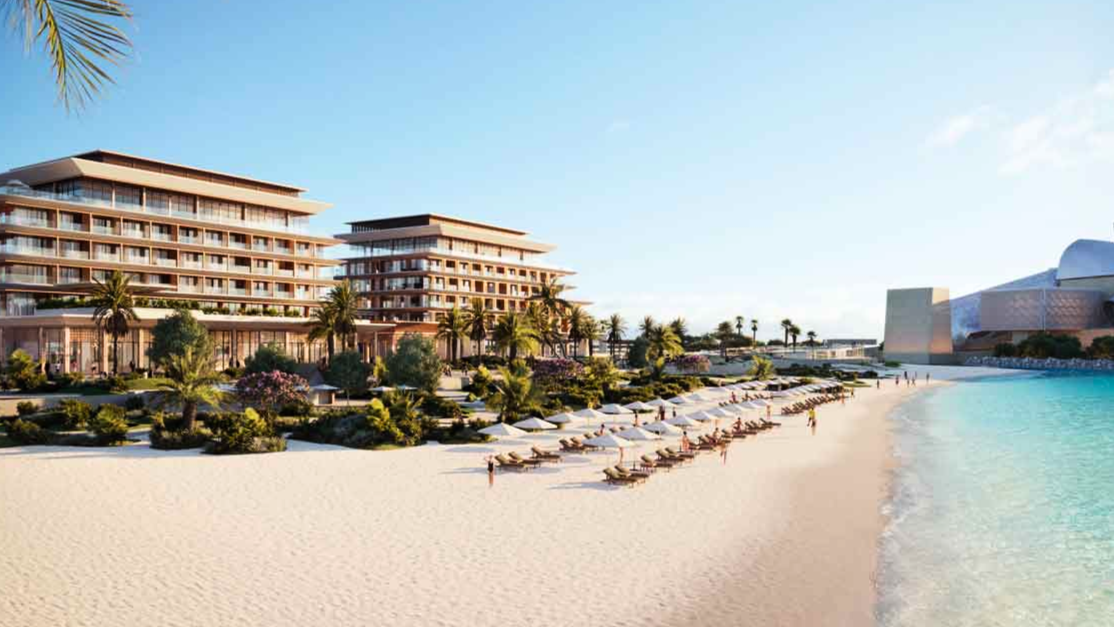
Alongside the villas, a different kind of product took shape. Projects like Mamsha Al Saadiyat introduced apartments, townhouses and penthouses along 1.4 kilometres of beach, with restaurants and retail steps away. More branded residences followed: Nobu Residences with Nobu Hospitality on Mamsha Beach, Mandarin Oriental Residences in the Cultural District as Abu Dhabi’s first under that brand, and Baccarat Residences Saadiyat, launched by Aldar in February 2026.
Each was described at launch in terms of what surrounds it as much as what it contains.
Different buyers, one standard
The island’s product range is broader than the branded tier suggests, and the segments serve genuinely different purposes.
Villa communities remain the option for space and privacy. What they offer is land, quiet and low density, without distance from the city.

Beachfront apartment communities serve buyers who want proximity. Mamsha and the developments around it place residents within walking distance of restaurants, beach access and the cultural district.

Branded residences serve a different calculation again. The buyer is purchasing a managed service standard alongside the property: concierge, wellness facilities, hospitality-run amenities and, in several cases, access to the operator’s wider network.

Newer additions such as Saadiyat Grove and The Row are adding retail, restaurants and public space near the Cultural District, extending the walkable model outward from the waterfront.
What connects these segments is not price. A villa and a branded apartment are different products for different lives. What connects them is the layer of amenities each one comes with, inside the community and across the island around it.
The amenity is the island
This is the substantive change Saadiyat introduced to Abu Dhabi’s luxury market.
Before the island’s cultural district existed, luxury residential in the emirate was sold on the unit: finishes, views, square metres, security. Saadiyat inverted that. Today it offers world-class museums, connectivity across the emirate, and schools with international reputations, all within a short walk or drive of the homes themselves.
A branded residence on Saadiyat is therefore priced against two things at once: the operator’s service standard, and an island that already functions as a destination independently of its housing. Neither works without the other. A hospitality brand attaches to a location that justifies it, and the location supports pricing because of what was built there before the homes arrived.
What comes next
In July 2026, Aldar launched Marsa Al Saadiyat, described in the Abu Dhabi Media Office announcement as the activation of the final phase of the Saadiyat Island masterplan. The district spans 6.4 million square metres, is designed for more than 58,000 residents, and includes mansions, villas, waterfront apartments and branded residences alongside a marina, a theatre district, schools and healthcare. Sales of the first homes are scheduled for the second half of 2026.
It continues the same approach that has defined the island so far: villas, apartments and townhouses under branded names, folded into complete communities rather than standalone towers. That approach is part of why Saadiyat remains one of Abu Dhabi’s most popular places to live.
What the island established
Saadiyat’s contribution to Abu Dhabi’s property market is a template rather than a set of buildings.
It demonstrated that cultural and educational infrastructure delivered ahead of residential density can support a price tier that did not previously exist locally. It demonstrated that international hospitality brands would enter Abu Dhabi at volume, which was not evident before those partnerships were signed. And it demonstrated that buyers would commit substantial capital to unbuilt homes in a district they could see taking shape around them.
The luxury market that resulted is unusually varied for a single island. A buyer looking at Saadiyat is choosing between formats and lifestyles rather than between quality tiers, because the standard was set at the district level rather than just at project level.
Whether that model transfers to other locations, and whether the island retains its character as it adds its largest district, are questions the next several years will answer. What the record establishes is narrower: for a decade, Saadiyat has been where Abu Dhabi’s definition of luxury took shape.
Sources: Abu Dhabi Real Estate Centre (ADREC) H1 2026 market results and 2025 annual report; Aldar Properties launch announcements; Abu Dhabi Media Office, 22 July 2026; Department of Culture and Tourism Abu Dhabi; Khaleej Times, 31 July 2026. This article is market commentary and does not constitute investment advice.

Join The Discussion