
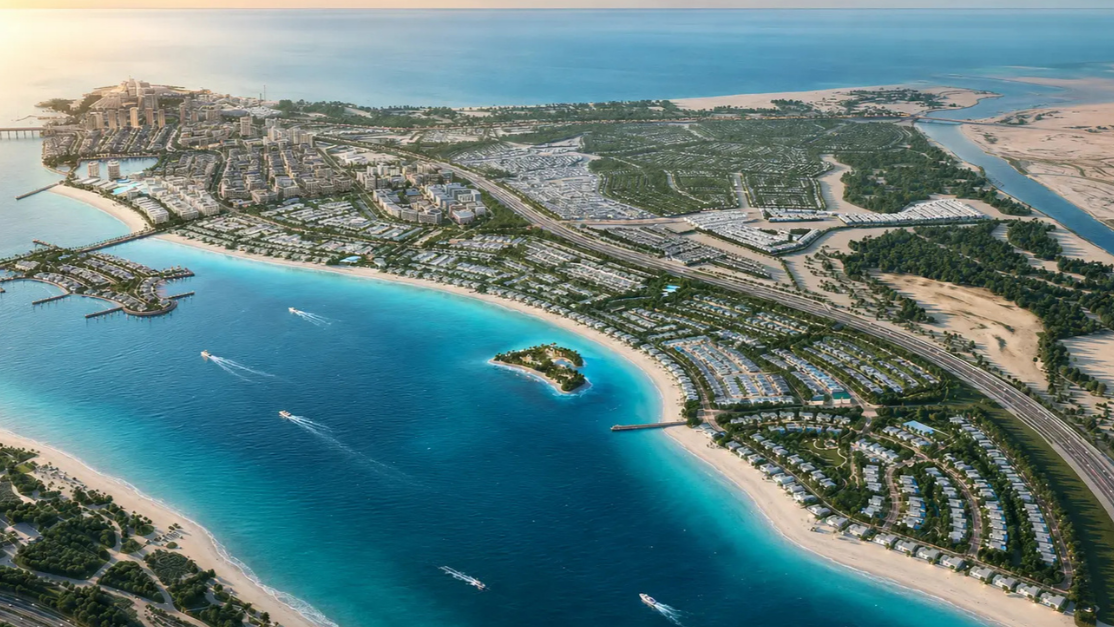
The island Abu Dhabi has been building for twenty years now has the last piece of its masterplan.
In July 2026, Abu Dhabi launched Marsa Al Saadiyat: a Dh100 billion waterfront district spanning 6.4 million square metres, designed for more than 58,000 residents, and home to what will become the emirate’s largest marina. Unveiled in the presence of Sheikh Khaled bin Mohamed bin Zayed Al Nahyan, Crown Prince of Abu Dhabi, and developed by Aldar, it marks the final phase of the Saadiyat Island masterplan.
That last detail is the one that matters most. Saadiyat has anchored Abu Dhabi’s cultural and luxury real estate strategy for two decades, and Marsa Al Saadiyat is the piece that completes its map. For anyone researching Abu Dhabi real estate or weighing UAE property investment, this district defines where the emirate’s most closely watched island goes next.
What Marsa Al Saadiyat adds to the island
The masterplan, as published at launch, concentrates on three things Saadiyat did not yet have at scale.
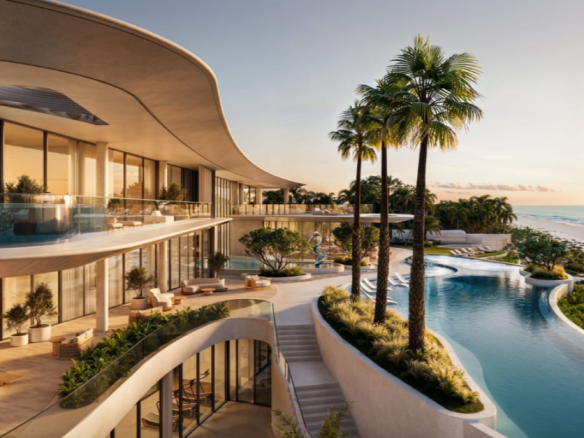
A waterfront lifestyle district. Eight kilometres of waterfront, 5.6 kilometres of beaches, Abu Dhabi’s largest marina with capacity for 350 yachts, and a one kilometre promenade with retail, dining, a yacht club and two luxury hotels. A theatre district anchored by Dar Al Funoon, a performing arts venue for more than 6,000 guests, extends the island’s cultural offering into live entertainment.
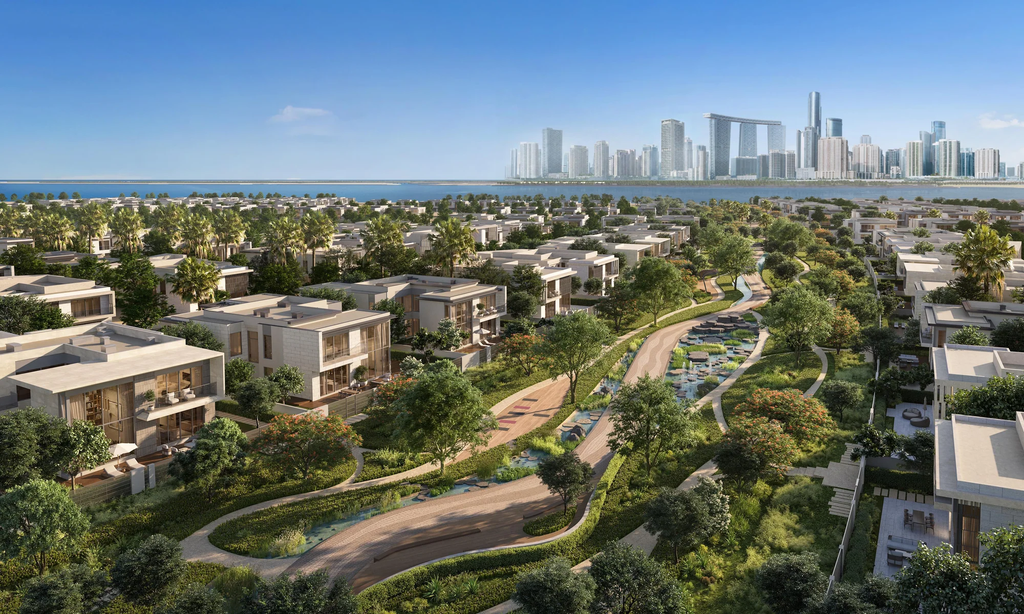
A full residential community. The plan spans private mansions, luxury villas, waterfront apartments and branded residences, supported by a central park, community clubhouses, sports facilities, healthcare services and three schools, with 140 kilometres of walking trails and a 46 kilometre cycling network keeping daily life within reach of home.
The first homes are already on the market. Talay, the district’s first residential community, was launched by Aldar with sales opening on 23 September 2026. It brings 351 standalone villas of four to six bedrooms in two collections: Talay, with 167 villas designed around family life and greenery, and Talay Beach, with 184 villas set closer to the beach.
New connections. Marsa Al Saadiyat will link to Reem Island and Umm Yifeenah Island through a new network of roads and tunnels, connect by bridge to a new Aldar island off the Saadiyat coast, and include an underground Etihad Rail high-speed station, placing the district on the UAE’s national rail network.
The plan behind Saadiyat Island
None of this is arriving on empty ground. Saadiyat’s transformation began in 2004, when the Abu Dhabi government announced plans to turn an island once known for fishing and pearl diving, and later for one of Sheikh Zayed’s earliest experiments in desert agriculture, into a global centre of art, culture and education. It was one of the emirate’s first major moves to build an economy beyond oil.
The plan was delivered in sequence, and each phase changed what the island meant. New York University opened its Abu Dhabi campus there in 2010. The Louvre Abu Dhabi, designed by Jean Nouvel, opened in 2017 and gave the island its global name. Today the Saadiyat Cultural District holds one of the region’s most significant concentrations of institutions: the Louvre Abu Dhabi, the Zayed National Museum, the Natural History Museum Abu Dhabi, teamLab Phenomena, and the Guggenheim Abu Dhabi, confirmed to open on 11 December 2026 in a building designed by Frank Gehry.
The luxury residential market followed the culture. Eight of Abu Dhabi’s ten most expensive residential projects by price per square metre sit on or near Saadiyat Island, led by Baccarat Residences, Four Seasons Private Residences at Saadiyat Beach and Nobu Residences. Marsa Al Saadiyat adds branded residences of its own to that list. Culture first, education second, luxury living third: Marsa Al Saadiyat is the third act at its largest scale, built around the beaches, the marina and the district where the museums already stand.
What the market data shows
Saadiyat’s position in the emirate’s property market is documented in official figures. According to the Abu Dhabi Real Estate Centre’s 2025 annual report, the island recorded approximately AED 13.7 billion in residential sales value in 2025, the highest of any district in the emirate that year and roughly four times its 2022 figure. Saadiyat also accounted for around a quarter of the emirate’s foreign direct investment sales.
Saadiyat’s momentum is part of a broader pattern. The island ranked third in the emirate by transaction value in Q1 2026, at AED 8.8 billion, in a market that reached AED 117 billion by the end of the first half.
The final phase of a twenty-year plan
Marsa Al Saadiyat closes the loop on a strategy Abu Dhabi set in motion two decades ago. The island that began with museums and a university now adds a major new residential district, its largest marina and a direct rail connection, on a stretch of coast that already leads the emirate’s sales data.
The details that matter next will arrive as the district’s first communities move from launch to construction. Until then, Marsa Al Saadiyat is best understood as its planners intended: the completing piece of the island Abu Dhabi has spent twenty years building.
Sources: Aldar Properties launch announcement (July 2026); Khaleej Times reporting on the Marsa Al Saadiyat launch and the Guggenheim Abu Dhabi opening date (Department of Culture and Tourism Abu Dhabi); Abu Dhabi Real Estate Centre (ADREC) 2025 annual report, Q1 2026 and H1 2026 published results; Al Ain Asset Management (Four Seasons Private Residences at Saadiyat Beach); Destinology, “The History of Saadiyat Island”. Figures as published by their sources and subject to change. This article is market commentary, not investment advice.

Join The Discussion